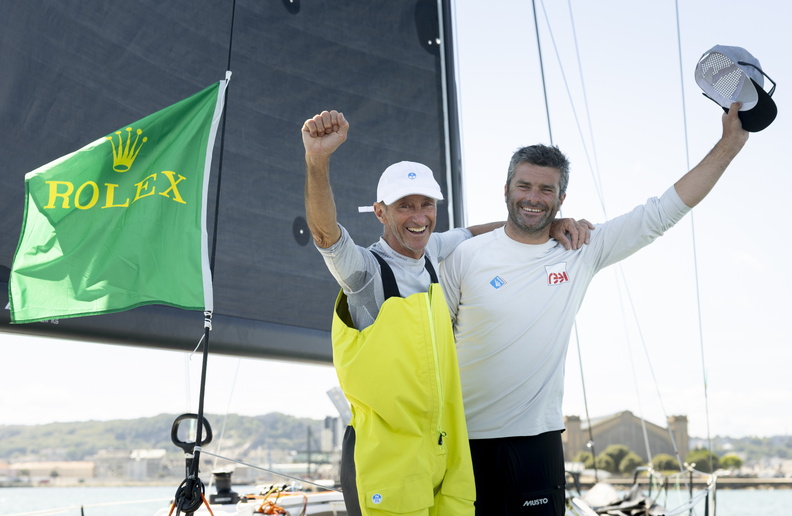
Evolution of Women's Sailboat Racing: The "Rolex" Turns 24
The Rolex International Women's Keelboat Championship has changed since the first event in 1985-and that's a good thing.
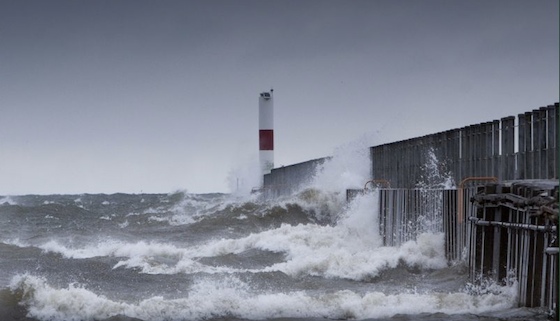
The weather certainly dominated dockside conversations at this year’s Rolex International Women’s Keelboat Championship. Too much wind the first day and too little on day three allowed us to complete only six of a planned eleven races. But the real story lies in what everyone—competitors, race management, judges, spectators, spouses— took for granted: the high quality competition among several generations of Olympic sailors.

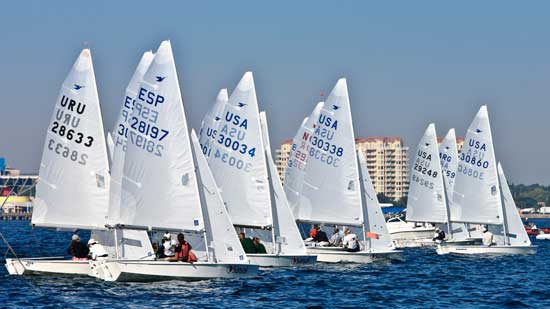
The 35-boat fleet enjoyed the sunshine and big waves of the final day's racing. Photo by Rolex/Dan Nerney
The first “Rolex” took place in 1985, three years before the first women’s Olympic medals were awarded. This year’s event was dominated by the current Olympic gold medalist in the women’s singlehanded discipline, Anna Tunnicliffe. Second place went to an alternate from the 1988 Olympics, Cory Sertl. The 2004 U.S. Olympic women’s keelboat skipper (that’s me) finished third. Two Olympic Yngling sailors, Dominique Provoyeur from South Africa and Jen Provan from Canada, finished fourth and fifth. The level of dedication required by Olympic preparation transfers quite well to this event, across both years and classes.
The US has yet to win an Olympic medal in the women’s keelboat, but we’ve won all thirteen Rolex regattas. Perhaps the deck is a bit stacked in our favor? This international event, which is always held in the USA (Newport, Annapolis, Houston, and now Rochester), is sailed in classes with a strong US presence: J/24’s and now J/22’s.
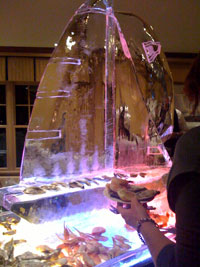
Thanks to Rolex, the parties at this event are also very special. Photo by Kim Couranz.
With only two teams from outside North America, I missed the international depth and breadth of years past, when Europe was well-represented and several teams of seven Japanese women (some in pink foulweather gear) cajoled a chartered J/24 around the race course. I also missed the chance to catch up with friends from around the world without getting on an airplane.
But this year’s lack of international flavor stems from the fantastic growth of women’s sailing worldwide. As other opportunities (Olympic and otherwise) have blossomed, the Rolex is no longer the only well-run event for women eager to do battle in small keelboats. And as skill levels have risen (thanks in part to the training required to succeed at this event over the past twenty-four years), more women are sailing against the boys at keelboat championships around the world.
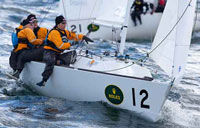
Team Cronin prepares to round the weather mark on day 4. Photo by Rolex/Dan Nerney
The Rolex continues to attract top-level competitors while providing an opportunity for women of all abilities to learn from each other. The next regatta is scheduled for 2011 in Rochester, and the top three teams have already announced their intention to return. May this very special event live on and continue to evolve, for many generations to come.
Editor's Note: Carol Cronin runs Live Wire, a writing and graphic design business specializing in the marine industry. She finished third at the 2009 Rolex with teammates Margaret Podlich, Kim Couranz, and Kate Fears. Sailing photos courtesy of Rolex/Dan Nerney.